Artifacts of Friction (2023 – ongoing)
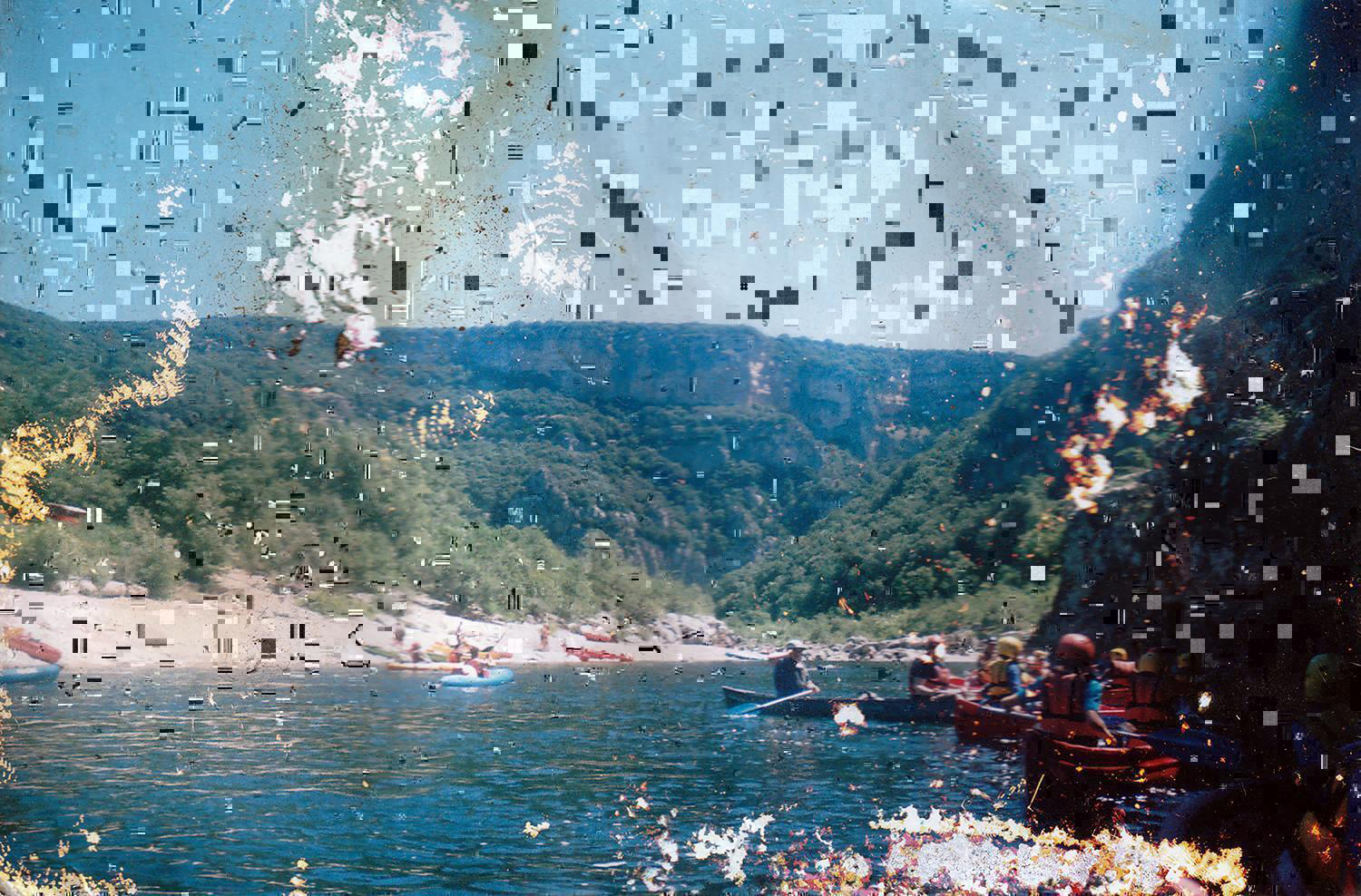
Artifacts of Friction is an exploration at the edges of human/computer experience. Friction is a physical, analogue experience. Mechanical and indexical, the wear makes reference to time, exposure and life. Digitally, modes of compression constitute a similar - digital friction - which creates it's own, visible, wear in the form of compression Artifacts.
The Post Digital landscape and our Networked Imagery presents an interesting relationship to physicality. Where are our images? How do they live and function. In response to contemporary ideas about the materiality and physicality of imagery, Digi-Friction attempts to approach this materiality in a new way:
The Jpg file format is a digital standard. As a tool of the digital age it presents much like a periodic element, presenting itself as a life-force for imagery. It is however simply a set of processes aimed at finding a balance between image quality and file-size. Without it, the high quality imagery which drives our networked modes of image reproduction would have struggled under the weight of higher quality file formats.
An easy analogue comparison (if possibly unhelpful in the digital age) would be to compare the Raw uncompressed file from the camera, to that of the negative. In this analogy, the .jpg is the equivalent to a low-cost print from a high street photo-developer. Repeated editing of an already compromised .Jpg gives way to the beautifully named Compression Artifacts. These are breakdowns that occur when compressing a compressed image. The general process of averaging which occurs fails and over multiple edits, the images degrades. The Compression artifacts typically form squares in certain areas - of flat colour, light and shade.
This repetitive, predictable nature of digital degradation reveals a key distinction between mechanical and digital frictions. Where analogue wear bears the indexical trace of singular events - a fingerprint, a storage mishap, environmental exposure - digital compression artifacts emerge from mathematical processes that remain consistent across iterations. The same algorithm will always fail in the same way, creating identical patterns of breakdown.
In Artifacts of Friction, physical photography which has undergone wear - a found image, a negative worn by storage - is digitised, converted to jpg and via a Python Programme edited thousands of times to induce the Compression Artifacts. In doing so, the images presented contain evidence of both their mechanical and digital frictions. Beyond an experiment of technicality, the images produced aim to invite the viewer to consider what the image is. Ultimately, after the analogue era -ruled by chemistry and the indexical properties of light, what does a photograph consist of in the Post-Digital age?
Click each image to find out more about it's specific context and image-life.
Project Images
